Understanding the different profiles available in metal roofs can ensure that you do not choose a type that is not well-suited for your intended application. Using a roofing type in a location where it is not ideal can lead to leaks, malformation, and other problems. In this article, you’ll find information to help you make an informed choice about the product that will work best, both aesthetically and functionally, for your home.

Standing Seam
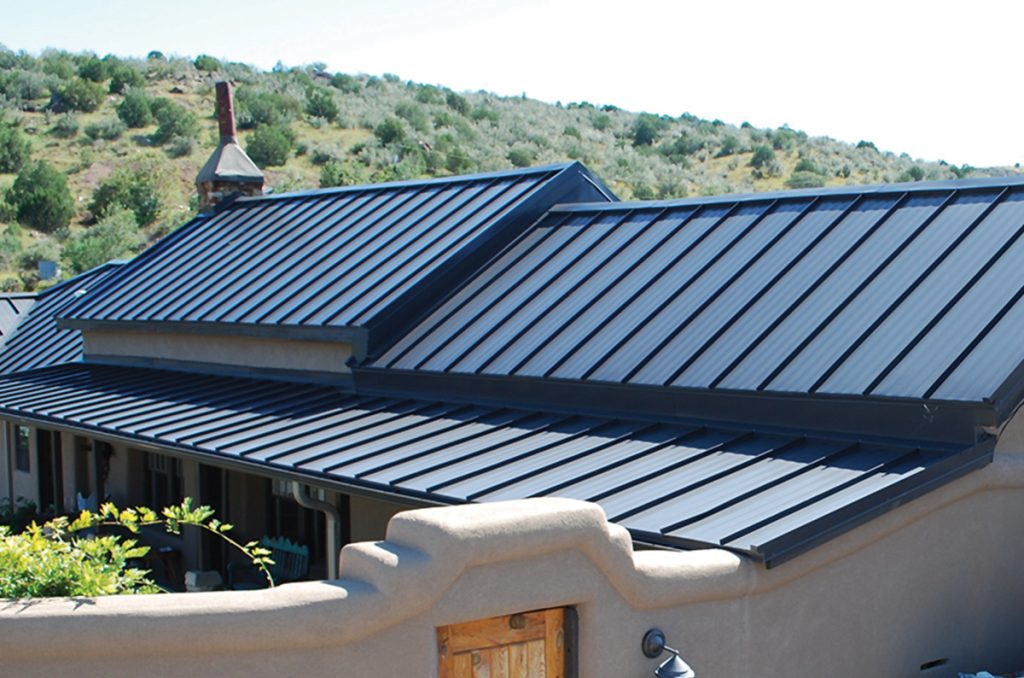
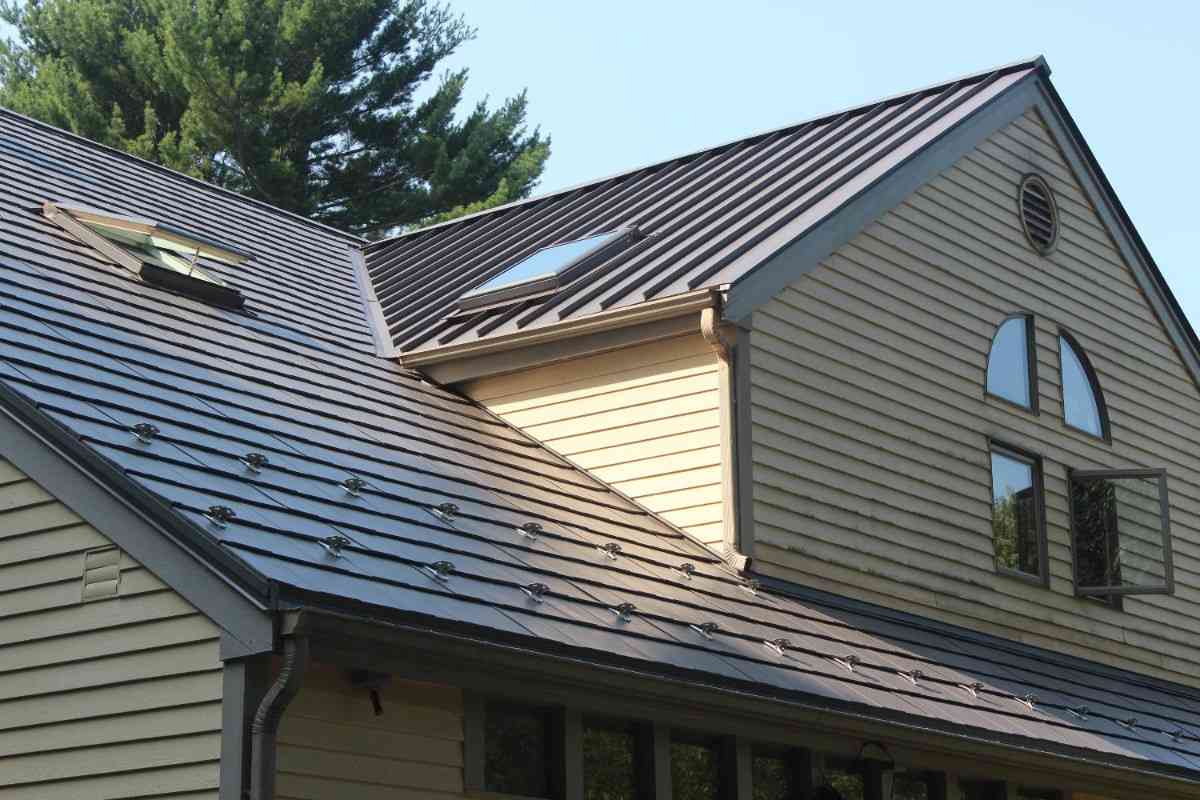
Probably the most recognizable profile of metal roofing for both commercial and residential projects, standing seam consists of long, vertical panels. The popularity of standing seam has grown so much in recent decades that it’s what many people think of first when they hear “metal roof.” A standing seam roof provides a distinctive, contemporary look that complements homes of many styles.
A critical consideration when choosing a standing seam is the dimensions of the roof. More often than not, residential roofs are smaller, more compact, and more complex than commercial roofs. As such, a standing seam roof with a relatively small panel width – usually around 12″ works best. Wider panels will present a more commercial look to the roof.
Standing seams can be either through- or clip-fastened. Through-fastened standing seam systems are less common and utilize a nailing “flange” that runs the length of the panels. The fasteners are driven through this flange and then concealed by the panel itself. So, although the fastener is concealed from the elements, it is still fastened directly through the panels themselves. These systems are more cost-effective options, but since most quality standing seams used in residential construction are continuous panels – meaning the panels are custom-formed to the length of the rafter – using these through-fastened panels is not recommended on longer rafter lengths. The reason is that the longer the panel, the more it will expand and contract, and the more likely it is to place stress on the fasteners, “wallow out” fastener holes, and create a rippled, “oilcan” effect. These through-fastened panels are a good option, however, for shorter runs such as porch accents or bay windows.
For longer runs, the better option is a standing seam system that utilizes a clip system. The clip should be manufactured from a similar metal as the standing seam itself, or from a metal like stainless steel that is not conducive to the galvanic action between dissimilar metals. The clip is fastened to the roof deck so that the panels are allowed to “float.” This helps to ensure that the system will maintain its water tightness much longer, and also its aesthetics, as oil canning is less likely to occur. For longer runs, a system with a higher rib is used. The rib is the portion of the standing seam that gives it its dimension and is also the joint of the two adjacent panels. Higher ribs will give the panels more capability to carry water down the entire length of the panel and prevent it from spilling over from one panel to another, possibly backing up under an overwhelmed rib or other flashing.
Standing seam roofs are most commonly manufactured from galvanized or Galvalume steel and range in gauge from 18 for the heavier structural products (rarely used in residences) to a lighter 26 or even 28 gauge for simpler projects. Gauge 24 and 26 are the most common for residential steel standing seams. Some high-quality standing seams, like Classic’s Premium Standing Seam, are manufactured in heavy-gauge aluminum; ranging typically from 0.032” to 0.050”, with 0.032” common for residential applications.
Our standing seam systems, come with an entire array of preformed flashings. These flashings help reduce installer error and help ensure a watertight roof for many decades to come. Flashings for true standing seam systems usually need to be custom-made for each job to exactly meet the pitch and other geometry of each roof.
Shake, Shingle, Tile, and Slate
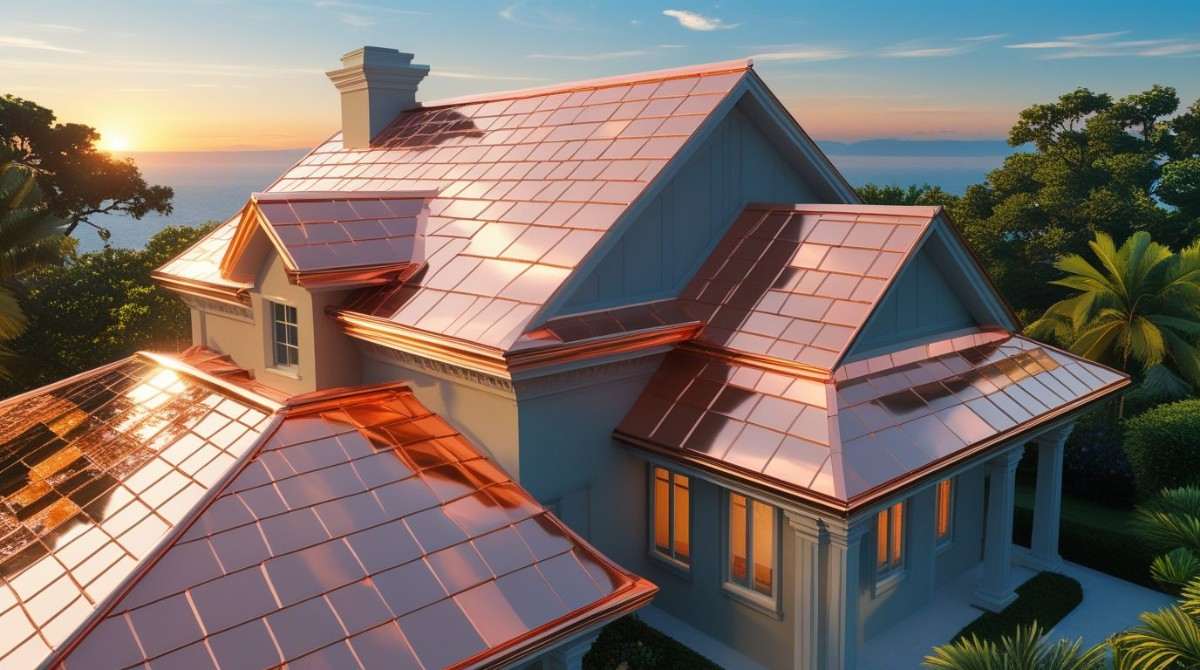
These newer styles of metal roofs are becoming quite popular because they combine the aesthetic of traditional roofing with the durability of metal roofing. Many of these specialty profiles are designed almost exclusively for residential use. Very early profiles of this type were designed for commercial applications (Pizza Hut or Dairy Queen, for example) and, with updates in manufacturing and coatings technology, have evolved into the beautiful residential systems that homeowners value. The four different types of “modular” panels can vary greatly in terms of look and use. Following is a description of all four.

Metal Shakes
Metal shakes mimic the look of hand-split cedar shakes. While many homeowners select these shake systems for their resemblance to wood shakes and long-term performance metal provides, other homeowners enjoy these specialty metal shake systems for their own, unique and distinctive look. These modular panels come in various sizes with common dimensions of 2’ x 1’ and 5’ x 1’ and are usually fastened to the roof deck with a concealed clip system or a nailing flange formed into the top of the shingle.
Shake and shingle facsimile profiles are installed on the roof in a staggered pattern to avoid vertical line repetition. The shake systems are usually more “high-profile” than shingle systems, meaning that they are designed with a little more dimension and texture. Often, this added dimension to the shingle allows it to be installed directly over previous roof layers, even some thin wood shingles. Metal shakes are usually manufactured from steel or aluminum, either 26 or 28 gauge steel, or 0.019” or 0.024”. Steel metal shakes are commonly coated with a post-forming stone coat or Kynar powder coat, which helps seal the edges in areas where the zinc or zinc/aluminum alloy coating has been spread thin over areas of tight bends. Some manufacturers, including Classic Products, also offer aluminum shakes with the special post-forming coats, which are selected more for aesthetic reasons than to ensure the functional soundness of the system.
Most metal shake systems come with a complete line of preformed flashings, which usually include hip caps, ridge caps, gable trim or flashing, sidewall flashing, eave starter strips, and valley. These flashings are typically universally designed to work with any roof pitch. Higher quality metal shake systems utilize an open valley system to keep leaves, ice, pine straw, etc. from blocking the valley and causing water to back up under the panels or the valley itself. Be sure to ask your contractor about the type of valley flashing used with the metal roof system you are considering.
Metal Shingles
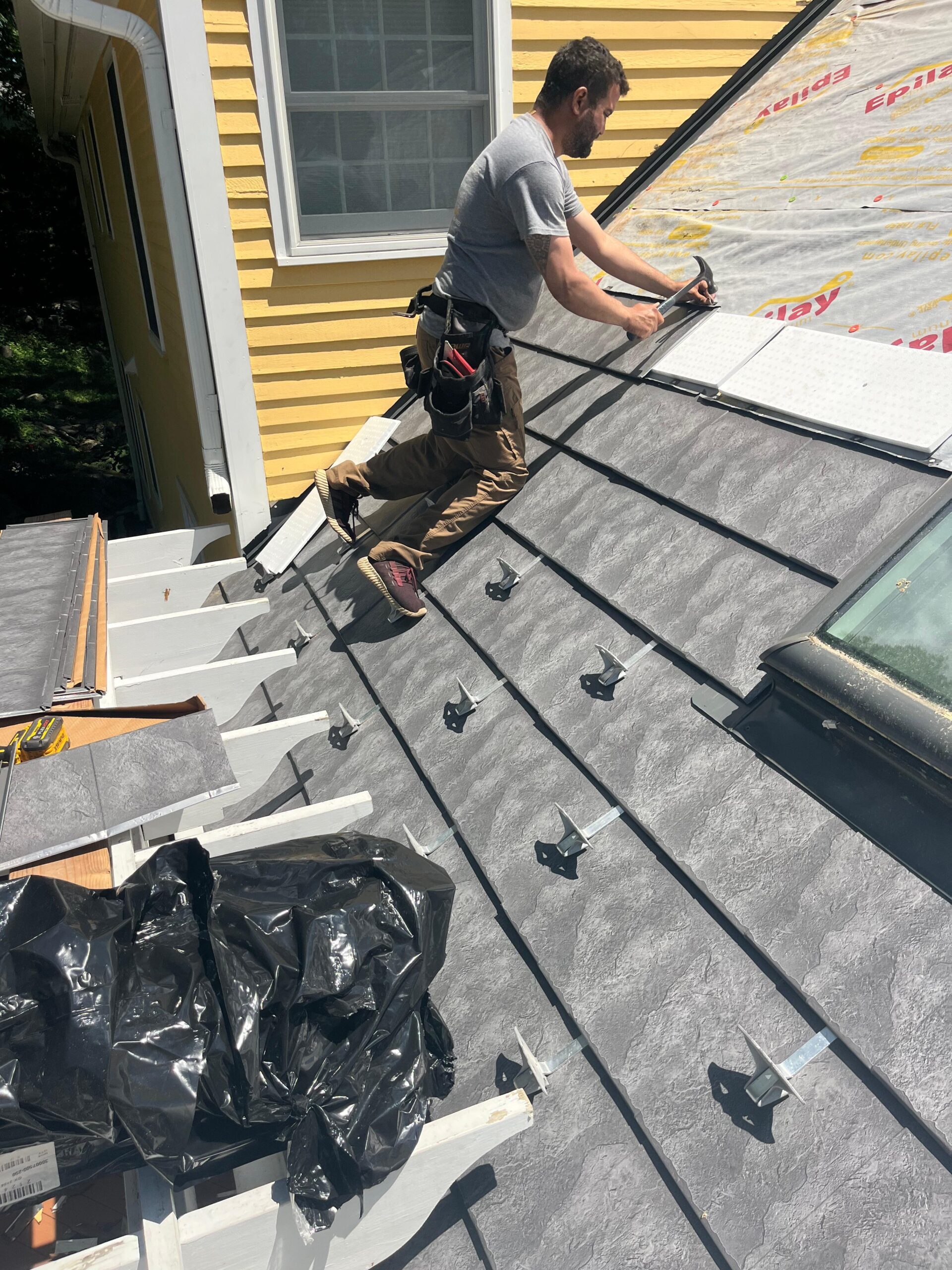
Metal shingles are similar to metal shakes except with a lower-profile design. Many homeowners who are frustrated with the short lives of the traditional machine-split wood shingles select metal shingles for their durability and beauty. Also, metal shingles look more like dimensional standard shingles; some homeowners choose them because they blend in with a more modest neighborhood look. Like shake profiles, the shingle metal roof systems are modularized panels fastened to the roof deck, most commonly with a clip system, or sometimes with a nailing flange formed into the top of the shingle.
Metal Tiles
Metal tile profiles come in a wide variety of looks and textures, from the exotic Mediterranean barrel tile look to the stately S-Serpentine look. Most tile profiles are through-fastened, and some utilize a batten grid attached to the roof deck to which the panels are attached.
Most metal tile systems are made in large sheets that stretch from eave to ridge. Fewer seams and quicker installation are a plus, but waste can be dramatically higher with such systems.

Metal Slate
Metal slate profiles are manufactured in steel, aluminum, and copper to replicate the look of natural slate. The advantage of metal facsimile slate profiles is that they are about 1/2 to 1/3 the cost of real slate, and are also significantly lighter than traditional slate, which can help prolong the life of older buildings.
Some other, more exotic profiles, such as diamond shapes, scalloped, and flat tiles, are available in metal roofing.