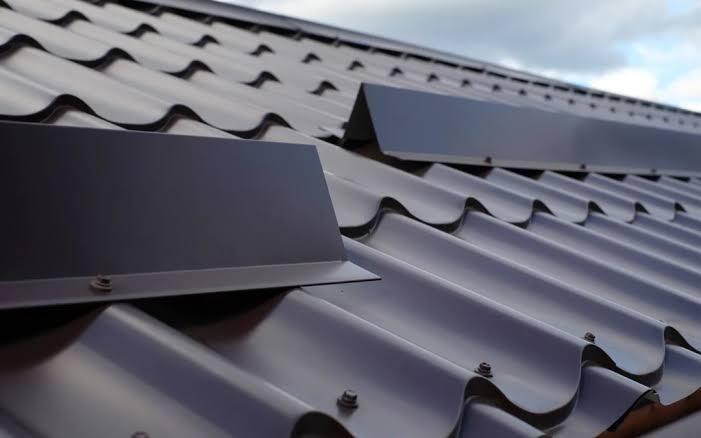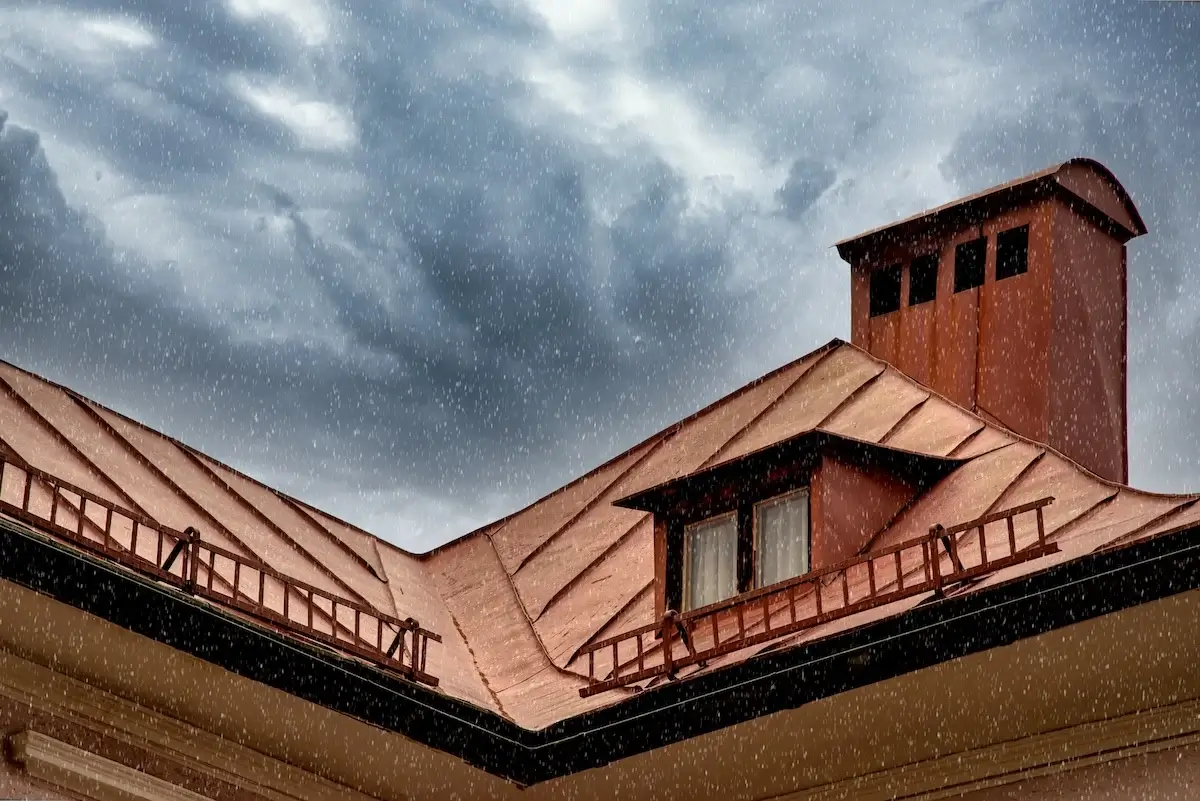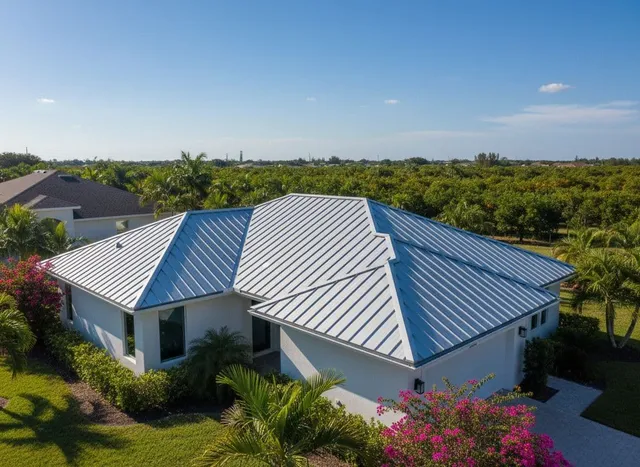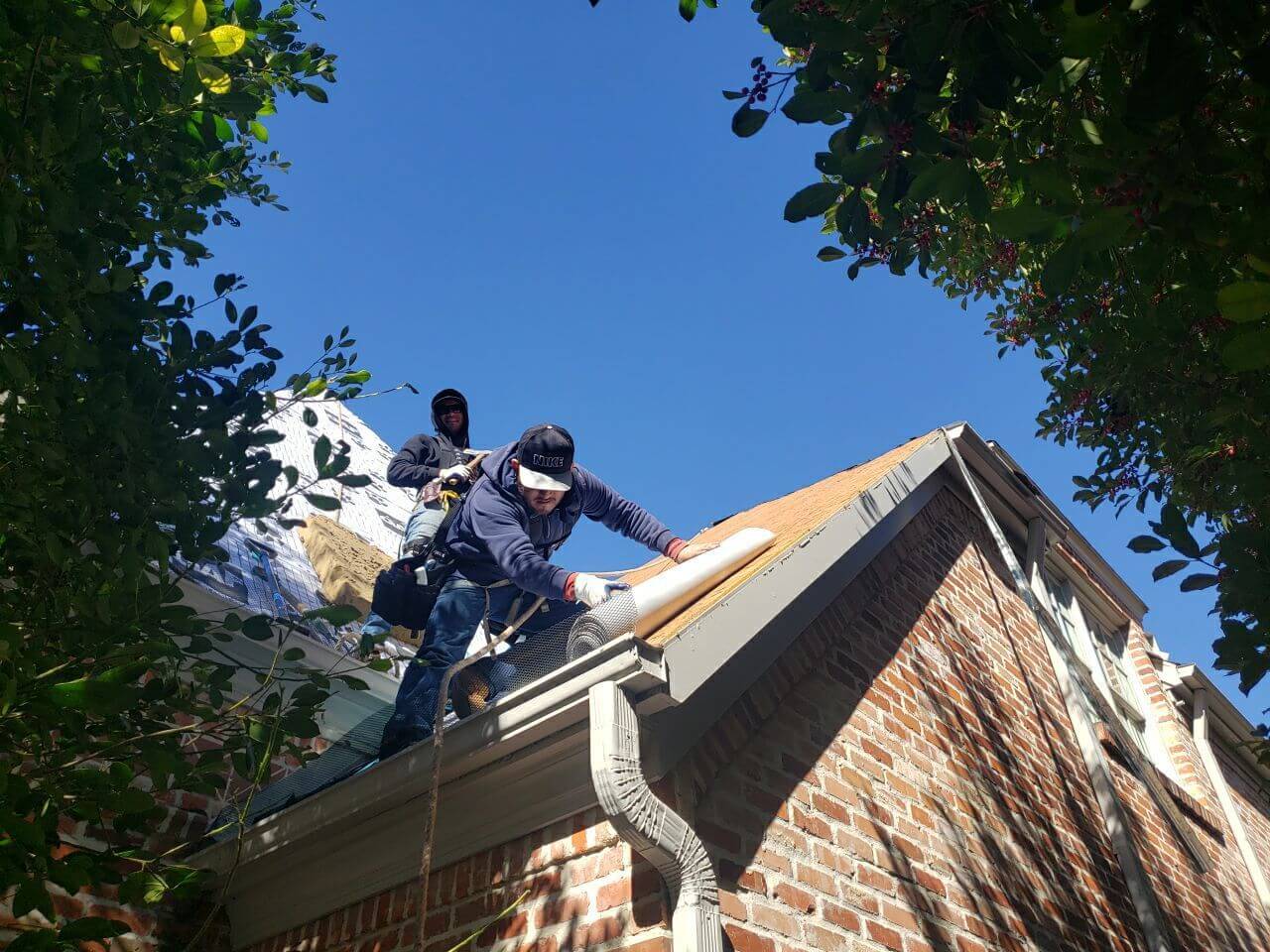


Base carbon/iron steel coated with an alloy of aluminum and zinc is known as Galvalume steel. When aluminum is added with zinc, both the positive and negative attributes of aluminum are magnified. Because aluminum itself is a very corrosion-resistant metal, Galvalume steel is also very corrosion resistant: The aluminum/zinc alloy provides barrier protection, as opposed to galvanic. The negative aspect of aluminum in the alloy, however, is that Galvalume does not self-protect scratches or cut edges nearly as well as galvanized steel does.
Additionally, Galvalume steel is also more susceptible to a process known as “Tension Bend Staining.” When the steels are formed into the various metal roofing profiles, the Galvalume zinc/aluminum and the galvanized zinc coatings are spread very thin over areas in the metal where there are deep folds or tight bends – so thin, in fact, that the coating has a tendency to form microscopic cracks. Because of galvanic action of zinc, galvanized steel is able to protect these scratches with little harm. With Galvalume steel, however, the aluminum in the alloy somewhat neutralizes zinc’s galvanic properties and therefore the
Galvalume steel is not able to self-protect the cracks, or other scratches in general. Tension Bend Staining occurs when moisture or other corrosive elements permeate these cracks and facilitate rusting. The result is “stains” of rust in areas with folds and bends in the metal.
For this reason, Galvalume steel is used most commonly in rather simple profiles, such as standing seam, because there is not quite as much bending in the metal. Because Galvalume steel is more corrosion-resistant than galvanized, it is sometimes installed unpainted. While this is most often done in commercial applications, homeowners who like the bright, shiny metallic look have selected unpainted Galvalume as well. Most Galvalume steel, though, like galvanized, is painted for added durability and beauty.
Galvalume Steel Summary
Application: Walls and roofs, most commercial, agricultural and Industrial building envelopes.
Advantages: Corrosion resistant, strong, relatively inexpensive (but often slightly more expensive than galvanized).
Disadvantages: Susceptible to tension bend staining, limited profile availability (mostly standing seam or simple shingle styles), must be cut with a shearing action rather than saw-cut. Highly susceptible to rust when cut on non-vertical surfaces. The valleys, end wall, side wall, and eaves all need to be cut during installation leaving an open edge of raw steel that moisture will wick into the roof. These are prime areas for water runoff and where rust will eventually occur. If skylights are present they all need to be cut around and flashed as well, yet another area to be concerned about rust.
Thicknesses: 24 gauge (0.024”) is most common for standing seam systems
Weight: Between 100 and 150 lbs. per square (one square = 100 sq. ft.).
Recycled Content: Usually around 35%.